

Is office worker back pain physiotherapy in Gulshan helpful for desk-related pain?
Yes, office worker back pain physiotherapy in Gulshan can help identify posture, sitting, muscle, and movement problems, then guide a safer recovery plan based on proper assessment.
Why Office Workers in Gulshan Commonly Suffer from Back Pain
Back pain is common among office workers because the modern workday often keeps the body in one position for too long. Many professionals in Gulshan spend hours at desks, in meetings, in cars, or in front of laptops. The body is made to move. When movement becomes limited, muscles, joints, discs, and connective tissues may start feeling overloaded.
Long sitting back pain usually begins quietly. At first, it may feel like a small tightness in the lower back. Later, it can become stiffness while standing up, discomfort after driving, or pain that returns every afternoon. Office worker back pain physiotherapy in Gulshan becomes important when the pain is no longer a “small inconvenience” and starts affecting focus, comfort, and productivity.
Long Sitting Hours and Pressure on the Lower Back
Sitting does not always cause pain by itself. The problem is static sitting. When someone sits for hours without enough movement, the lower back stays under repeated compressive load. The hip muscles may tighten. The core muscles may become underactive. The spine can lose its natural rhythm of movement.
For office workers, this creates a slow type of strain called cumulative micro-stress. It does not always appear in one day. It builds over time. You may feel fine during work, then feel back tightness when you stand, walk, or lie down.
Desk job back pain relief often requires more than a painkiller or a quick massage. A physiotherapist may need to assess posture, mobility, muscle strength, sitting pattern, and daily habits before suggesting lower back pain physiotherapy.
Poor Chair Support and Weak Sitting Posture
A chair can either support your spine or quietly increase your discomfort. If the chair is too low, too high, too deep, too soft, or has poor lumbar support, your body starts compensating. The pelvis may roll backward. The shoulders may round. The head may move forward. The lower back may flatten.
Correct sitting posture helps reduce neck and back strain. A good workstation should match the person, not force the person to adjust awkwardly to the workstation. This is the main idea behind ergonomic physiotherapy Gulshan and workplace posture therapy.
Many office workers try to “sit straight” for a few minutes, but posture correction is not about holding a stiff military position all day. It is about creating a comfortable, supported, and changeable posture that allows the body to breathe and move.
Laptop, Phone, and Desk Habits That Affect the Spine
Laptop work is one of the most common reasons office workers develop neck and back discomfort. A laptop screen is often too low, so the head bends forward. The keyboard is attached to the screen, so the arms and neck cannot both stay in an ideal position at the same time.
Phone habits also matter. Looking down at a phone for long periods can increase neck strain and upper back heaviness. Over time, this can contribute to shoulder pain from desk work, forward head posture, and muscle imbalance.
That is why neck pain physiotherapy in Gulshan may be needed alongside back pain treatment. The spine works like a connected kinetic chain. When the neck, shoulders, ribs, lower back, and hips do not coordinate well, pain can move or spread.
Why Back Pain Often Comes With Neck and Shoulder Stiffness
Office back pain rarely stays in one perfect location. Many desk workers feel lower back tightness, then neck stiffness, then shoulder heaviness. This happens because the body adapts as a system.
If the lower back is unsupported, the upper back may round. If the upper back rounds, the neck may move forward. If the neck moves forward, the shoulder muscles may become tense. This creates a loop of discomfort.
Chowa’s neck pain content also connects poor posture, long screen time, desk jobs, and muscle tightness with neck pain and the need for structured physiotherapy, posture correction, and ergonomic guidance.
How Office Lifestyle Slowly Creates Posture-Related Pain
Office lifestyle can create pain through repetition. Small habits repeated daily can change how the body feels and moves. Sitting without breaks, leaning toward the screen, twisting to use a second monitor, holding the phone between ear and shoulder, or working from a bed can all contribute to posture-related pain.
This is where posture correction Gulshan services can help. The goal is not only to reduce current pain. It is to teach better movement behavior so the same pain does not keep returning.
Office Worker Back Pain Physiotherapy in Gulshan: When Should You Take It Seriously?
You should take back pain seriously when it keeps returning, spreads, limits movement, affects sleep, or stops you from working comfortably. Mild stiffness after a long day may improve with movement and rest. But repeated pain needs attention.
Office worker back pain physiotherapy in Gulshan may help when your pain is connected with sitting, poor posture, long screen time, weak muscles, or workstation strain. A physiotherapist can assess whether your symptoms look like mechanical back pain, posture-related discomfort, nerve irritation, or another issue that needs medical referral.
The NHS notes that back pain is common and often improves within weeks, but medical advice is recommended if pain does not improve after home care, stops normal activity, causes concern, or comes with warning signs. [4]
Back Pain That Keeps Returning After Rest
Rest may calm pain for a short time, but if pain returns again and again, the root cause may still be present. For office workers, the cause may be poor desk setup, weak core muscles, reduced hip mobility, poor sitting tolerance, or repetitive strain.
Repeated pain is a signal. It does not mean something dangerous is happening every time. But it does mean your body needs better support, smarter movement, and proper assessment.
Pain That Increases After Sitting at a Desk
If your pain becomes worse after one or two hours of sitting, your sitting posture and work habits may be part of the problem. You may need ergonomic physiotherapy Gulshan support to understand your chair height, monitor position, desk reach, foot support, and movement breaks.
A physiotherapist may check how your spine moves, how your hips behave, and whether your muscles are stiff, weak, or overactive. Based on that assessment, your plan may include manual therapy, mobility exercises, strengthening, posture correction, and home care advice.
Stiffness While Standing Up After Long Work Hours
Many office workers feel pain when they stand up after long sitting. This may happen because the hips, lower back, and hamstrings become stiff. It may also happen because the muscles supporting the spine become tired after holding one position for too long.
The solution is not always to buy an expensive chair. Often, the better solution is a combination of movement breaks, workstation changes, strengthening, and posture awareness.
Pain Spreading to the Hip, Leg, Neck, or Shoulder
Pain that spreads needs closer attention. Lower back pain spreading to the hip or leg may involve nerve irritation, disc-related problems, or referred pain. Neck or shoulder symptoms may be linked with upper spine posture and desk strain.
If pain spreads with tingling, numbness, weakness, or loss of control, do not ignore it. Some symptoms need urgent medical attention.
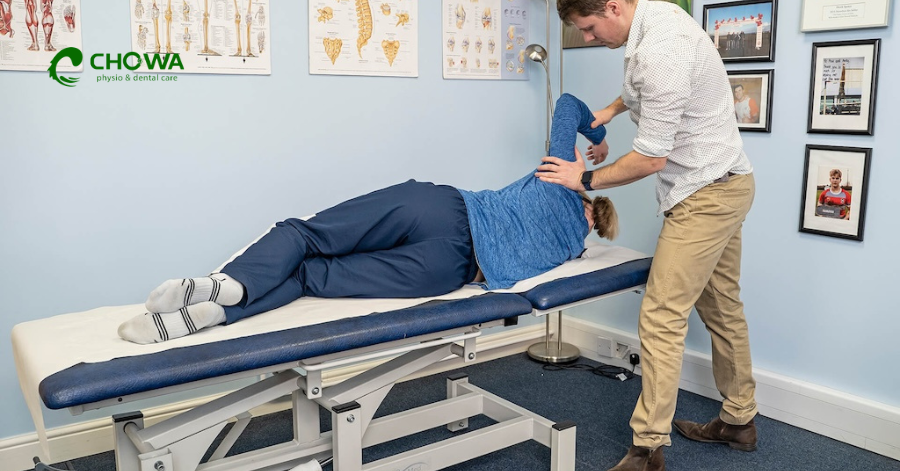
The Connection Between Back Pain, Neck Pain, and Posture
Back pain, neck pain, and posture are deeply connected. Poor posture can increase strain on spinal muscles and joints. But posture is not only about appearance. It is about load management.
Forward head posture, rounded shoulders, a collapsed chest, and a slouched pelvis can increase the work done by muscles that were not designed to stay tense all day. This may lead to neck stiffness, upper back fatigue, lower back pain, and reduced mobility.
Neck pain physiotherapy in Gulshan may be useful when back pain appears with neck stiffness, screen-related discomfort, or shoulder tightness. Posture correction Gulshan services can help office workers understand how daily habits affect the full spine.
Forward Head Posture, Rounded Shoulders, and Desk Strain
Forward head posture happens when the head sits too far in front of the shoulders. This is common during laptop and mobile use. Rounded shoulders often follow. The upper back becomes kyphotic, the chest tightens, and the neck muscles work harder.
This desk strain pattern may create cervicothoracic overload. In simple words, the neck and upper back carry more load than they should. Over time, this may cause discomfort and fatigue.
Muscle Imbalance Caused by Long Sitting
Long sitting can make some muscles tight and others weak. Hip flexors may shorten. Glutes may become underactive. Deep core muscles may lose endurance. Upper trapezius and neck muscles may overwork.
A physiotherapist may identify these imbalances and create a plan that includes stretching, activation, strengthening, and movement retraining. This is one reason office back pain treatment Gulshan should be personalized.
Common Symptoms Office Workers Should Not Ignore
Office workers should not ignore lower back tightness, neck stiffness, shoulder pain, upper back heaviness, tingling, numbness, radiating pain, or pain that affects sleep and daily function.
A simple rule helps: if pain is new, mild, and improving, monitor it carefully. If pain is persistent, worsening, spreading, or interfering with life, book an assessment.
Lower Back Tightness After Sitting
Lower back tightness after sitting is one of the most common symptoms among desk workers. It may feel like pressure, pulling, or heaviness. You may feel the need to stretch repeatedly, but the relief may not last.
Physiotherapy for computer users can help by identifying whether the tightness is coming from the lower back, hips, pelvis, or poor sitting habits.
Neck Stiffness From Laptop or Mobile Use
Neck stiffness often appears with long screen time. It may feel worse at the end of the day or after video meetings. If it continues, neck pain physiotherapy in Gulshan may help improve mobility, muscle balance, and ergonomic habits.
Shoulder Pain, Upper Back Heaviness, or Muscle Fatigue
Shoulder pain from desk work can happen when the mouse is too far, the keyboard is too high, the shoulders stay lifted, or the screen encourages leaning forward. Over time, muscles become fatigued and irritated.
This is why workplace posture therapy should look at the full desk setup, not only the painful area.
Tingling, Numbness, or Radiating Pain
Tingling, numbness, or radiating pain should be taken seriously. These symptoms may suggest nerve involvement. They do not always mean something dangerous, but they need professional evaluation.
The NHS recommends immediate emergency care if back pain occurs with pain, tingling, weakness, or numbness in both legs, loss of feeling around the genitals or anus, bladder or bowel changes, chest pain, or after a serious accident.
What Causes Desk-Related Back Pain?
Desk-related back pain can come from weak core muscles, poor workstation setup, lack of movement, repetitive tasks, stress-related tension, old injuries, or disc-related problems.
Sometimes the cause is not one big issue. It is the combination. A low chair, long sitting, weak glutes, shallow breathing, and poor sleep can work together to make pain worse.
Weak Core Muscles and Reduced Spinal Support
The core is not just the “six-pack” area. It includes deep stabilizing muscles around the trunk, pelvis, and spine. When these muscles lack endurance, the lower back may carry too much load during sitting, standing, and lifting.
Lower back pain physiotherapy often includes graded strengthening. This means exercises are started gently and progressed based on tolerance.
Poor Workstation Setup and Wrong Monitor Height
A poor workstation forces the body into awkward positions. The monitor may be too low. The keyboard may be too far. The chair may not support the back. Feet may hang or press unevenly into the floor.
Ergonomics means fitting the job to the person. OSHA explains that ergonomics can reduce muscle fatigue and lower the number and severity of work-related musculoskeletal disorders.
Lack of Movement Breaks During Office Hours
The spine likes movement. Sitting in one perfect posture for hours is still not ideal. The body needs variation.
Short movement breaks can reduce stiffness, improve blood flow, and decrease static loading. Even small changes matter: standing for a minute, walking during a call, shoulder rolls, gentle back extension, or hip mobility work.
Repetitive Mouse, Keyboard, and Phone Habits
Repetition can irritate muscles and tendons. A mouse placed too far away can strain the shoulder. A keyboard placed too high can increase neck and arm tension. Holding a phone while typing can overload the neck.
Ergonomic physiotherapy Gulshan can help office workers adjust these habits and create a more spine-friendly workspace.
Stress-Related Muscle Tension and Shallow Breathing
Stress can change posture and breathing. Many people breathe shallowly when working under pressure. This can increase neck, shoulder, and chest tension.
A physiotherapy plan may include breathing awareness, relaxation techniques, gentle mobility, and movement confidence. Pain is physical, but the nervous system also plays a role.
Old Injury or Disc-Related Issues Becoming Worse With Sitting
Some office workers have old injuries or disc-related problems that become worse with prolonged sitting. This does not mean sitting is always harmful, but it may mean the spine needs better load management.
Assessment is important. No single exercise or machine is right for everyone. NICE guidance for low back pain and sciatica emphasizes assessment and individualized decisions based on patient needs and clinical judgment.
How Ergonomic Physiotherapy Gulshan Helps Office Workers
Ergonomic physiotherapy Gulshan helps office workers understand the relationship between pain, posture, workstation design, and daily movement. It is not only treatment. It is education plus physical rehabilitation.
A good plan may include posture assessment, movement analysis, desk setup guidance, stretching, strengthening, manual therapy, and home exercise. The goal is to reduce pain, improve function, and prevent repeated flare-ups.
Workstation Posture Assessment and Movement Analysis
A physiotherapist may ask how long you sit, what chair you use, where your screen is placed, how you use your phone, and when the pain begins. They may observe your sitting posture, spinal movement, hip mobility, shoulder position, and muscle control.
This helps identify the real triggers behind desk job back pain relief needs.
Desk, Chair, Monitor, and Keyboard Setup Guidance
Small changes can make a big difference. Your monitor should support a comfortable head position. Your chair should support your lower back. Your keyboard and mouse should allow relaxed shoulders. Your feet should feel supported.
Cambridge University Hospitals explains that the workstation should suit the user and that equipment height and position should be corrected for the person’s stature.
Stretching and Strengthening Exercises for Desk Workers
Stretching may reduce tightness, but strengthening helps the body tolerate work demands. A physiotherapist may suggest exercises for the hips, core, back, glutes, neck, and shoulders.
The right exercises depend on assessment. If pain worsens during exercise, stop and seek professional advice. NHS guidance also recommends staying active, using appropriate heat or cold support, and trying exercises and stretches carefully for back pain.
What to Expect During Physiotherapy at Chowa in Gulshan
At Chowa Physio & Dental Care Gulshan, office workers can expect an assessment-based approach. The ergonomics correction page says physiotherapists assess posture, work desk, and daily movements, then provide posture correction exercises, desk setup advice, stretching, strengthening, and healthy habit tips.
This makes the service relevant for office worker back pain physiotherapy in Gulshan, especially for people with long sitting back pain, neck stiffness, shoulder strain, and posture-related discomfort.
Initial Posture and Pain Assessment
The first step is understanding your pain story. When did it start? What makes it worse? What makes it better? Does it spread? Is there numbness or weakness? How many hours do you sit? What does your workstation look like?
This assessment helps guide safe treatment.
Identifying Muscle Tightness, Weakness, and Mobility Limits
The physiotherapist may check whether your hips are stiff, your core is weak, your back movement is limited, or your neck and shoulders are overloaded. These findings help create a plan that matches your condition.
Guided Exercises, Manual Therapy, Posture Correction, and Home Care Advice
Treatment may include manual therapy, guided exercise, stretching, strengthening, posture correction Gulshan support, and home care advice. The plan may also include desk setup changes and movement reminders.
The goal is not only temporary relief. It is better daily function.

Follow-Up Plan to Track Progress and Prevent Repeated Pain
Follow-up matters because office back pain can return if habits do not change. Your physiotherapist may adjust exercises, progress strengthening, review workstation changes, and guide return to normal activity.
Posture Correction Gulshan: Practical Changes for Office Workers
Posture correction Gulshan should be practical. It should fit real office life. Nobody sits perfectly all day. The goal is to sit better, move more, and reduce repeated strain.
How to Sit With Better Spinal Alignment
Sit back in the chair. Keep the lower back supported. Relax the shoulders. Keep the screen near eye level. Keep feet supported. Avoid leaning forward for long periods.
Better posture should feel stable, not rigid.
Choosing the Right Chair Height and Back Support
Your hips should not be much lower than your knees. Your chair should support the natural curve of your lower back. Your arms should rest comfortably without lifting the shoulders.
Simple Movement Breaks Every Work Hour
Take short breaks. Stand. Walk. Stretch gently. Change position. These small movements reduce stiffness and support spine health for office workers.
Home and Office Care Tips for Back Pain Relief
Home care can help mild desk-related discomfort. But it must be safe and symptom-based.
Gentle lower back stretches, hip mobility work, neck and shoulder movement, and core strengthening may help. Heat may reduce stiffness, while cold may help some pain or swelling. These should be used carefully and based on your comfort.
NHS guidance supports staying active, avoiding long bed rest, using heat or cold where appropriate, and trying exercises and stretches while stopping if pain worsens.
When Home Care Is Not Enough
Home care is not enough if pain keeps returning, spreads to the leg or arm, causes numbness, affects sleep, limits work, or gets worse despite rest and movement. In these cases, a physiotherapy assessment is a safer next step.
Office Worker Back Pain vs Serious Spine Problems
Most office-related back pain is mechanical and manageable. But some symptoms may suggest a serious condition. This is why online content should never replace diagnosis.
Normal desk-related stiffness may improve with movement, rest, and posture changes. Serious symptoms may include progressive weakness, severe radiating pain, numbness in both legs, bladder or bowel changes, fever, unexplained weight loss, or pain after trauma. [4]
Why Diagnosis Should Not Be Guessed From Online Content
Two people can have similar pain but different causes. One may need posture correction. Another may need nerve-sensitive care. Another may need a medical referral. Guessing can lead to wrong exercises and delayed treatment.
Assessment-dependent physiotherapy care helps reduce this risk.
Why Choose Chowa Physio & Dental Care for Office Back Pain in Gulshan?
Chowa Physio & Dental Care is located in Gulshan 2, Dhaka, and provides physiotherapy and dental care services. The clinic’s official information lists House 7A, Road 41, Gulshan 2, Dhaka-1212, phone +8801714-066288, email chowasphysio@gmail.com, and daily hours from 10 AM to 10 PM.
For office workers, Chowa is relevant because its documented physiotherapy services include back and neck pain treatment, chronic pain management, ergonomics correction, pain and arthritis management, disc-related problem management, and other rehabilitation services.
Convenient Physiotherapy Care in Gulshan 2, Dhaka
Location matters because physiotherapy may need more than one visit. A clinic in Gulshan 2 is convenient for people from Gulshan, Banani, Baridhara, Niketan, Mohakhali, Badda, and nearby corporate areas.
Support for Back Pain, Neck Pain, Posture Issues, and Ergonomic Correction
Office workers often need combined support. Back pain may need lower back pain physiotherapy. Neck stiffness may need neck pain physiotherapy in Gulshan. Desk strain may need ergonomic physiotherapy Gulshan and posture correction Gulshan.
Patient-Focused Care for Office Workers, Students, and Professionals
Chowa’s ergonomics correction page specifically mentions office workers, students, and drivers as people who may suffer from neck, back, and shoulder pain due to posture and sitting habits.
FAQs
What causes back pain in office workers?
Office workers commonly develop back pain from long sitting, poor chair support, weak core muscles, poor workstation setup, lack of movement breaks, stress-related muscle tension, and repetitive laptop or phone habits.
Can physiotherapy help desk-related back pain?
Yes, physiotherapy may help desk-related back pain after proper assessment. Treatment may include posture correction, strengthening, stretching, manual therapy, ergonomic advice, and home exercises.
When should I visit a physiotherapist for office back pain?
Visit a physiotherapist if back pain keeps returning, gets worse after sitting, spreads to the hip or leg, affects sleep, limits work, or does not improve with basic home care.
Is neck pain physiotherapy in Gulshan needed with back pain care?
It may be needed if back pain comes with neck stiffness, shoulder pain, forward head posture, or screen-related discomfort. A physiotherapist can assess whether neck care should be part of the plan.
How does posture correction Gulshan support office workers?
Posture correction Gulshan services can help office workers improve sitting habits, workstation setup, spinal alignment, muscle balance, and movement routines to reduce repeated strain.
What is ergonomic physiotherapy Gulshan?
Ergonomic physiotherapy Gulshan focuses on how your body interacts with your desk, chair, monitor, keyboard, phone, and work habits. It combines physiotherapy with practical workplace setup guidance.
How long does office worker back pain physiotherapy take?
The timeline depends on the pain cause, duration, severity, lifestyle, and consistency with exercises. Some people need short-term guidance, while others need a longer structured plan.
Can poor workstation setup cause lower back pain?
Yes, a poor workstation setup can increase strain on the lower back, neck, shoulders, and wrists. Chair height, monitor position, keyboard placement, and movement breaks all matter.
What should I do if pain spreads to my leg or arm?
If pain spreads with tingling, numbness, weakness, or worsening symptoms, book a professional assessment. Seek urgent help if symptoms are severe or come with red flags.
How can I book physiotherapy at Chowa in Gulshan?
You can book an appointment with Chowa Physio & Dental Care through the website appointment form, phone, or WhatsApp option. The clinic is located at House 7A, Road 41, Gulshan 2, Dhaka-1212.
Final Appointment CTA
Desk-related pain does not have to become your daily normal. If you are struggling with long sitting back pain, neck stiffness, shoulder pain from desk work, or posture-related discomfort, book an office worker back pain physiotherapy assessment at Chowa Physio & Dental Care.
Visit Chowa in Gulshan 2, Dhaka for posture-focused physiotherapy guidance. Call or WhatsApp to discuss your desk-related back pain, neck pain, or ergonomic concerns before booking.
About Chowa Physiotherapy & Dental Care
Chowa Physio & Dental Care is a trusted physiotherapy and dental care center in Gulshan 2, Dhaka, offering patient-focused care for pain relief, posture correction, rehabilitation, and dental health. For people searching for office worker back pain physiotherapy in Gulshan, Chowa provides assessment-based physiotherapy, ergonomic guidance, and personalized care for office workers, students, professionals, and families in nearby Dhaka areas.
