

Do you need ergonomics correction in Gulshan if your back, neck, or shoulders hurt after desk work?
Yes, ergonomics correction in Gulshan can help identify poor posture, unsafe workstation habits, and movement problems that may contribute to daily pain.
Office life looks calm from the outside. But inside the body, long sitting, forward neck posture, low laptop screens, stiff chairs, and repetitive hand movements can create silent stress. Over time, this stress may affect your spine, muscles, joints, wrists, and shoulders.
At Chowa Physio & Dental Care in Gulshan, Dhaka, ergonomics correction focuses on posture, workplace habits, desk setup, and physiotherapy-based guidance. The goal is not only short-term comfort. The bigger goal is better movement, safer sitting, less strain, and a healthier daily routine based on professional assessment.
This guide explains how ergonomic physiotherapy Gulshan may help office workers, computer users, students, drivers, and anyone dealing with posture-related discomfort.
What Is Ergonomics Correction in Gulshan?
Eronomics correction in Gulshan means improving the way your body interacts with your workspace, chair, desk, computer, phone, and daily movement habits. It is a practical physiotherapy-based approach that looks at how you sit, stand, type, lift, bend, and move during the day.
In simple words, ergonomics correction teaches your body and your workstation to work together better.
When posture is poor, the body compensates. The neck moves forward. The shoulders round. The lower back loses support. The wrists bend while typing. These small changes may look harmless, but they can create repeated micro-stress on muscles and joints.
Ergonomic physiotherapy Gulshan helps by checking posture, workstation arrangement, pain patterns, muscle tightness, joint movement, and daily habits. A physiotherapist may guide you through posture correction in Gulshan with simple changes, exercises, stretching, strengthening, and desk setup advice.
This is especially useful for people who spend long hours at a desk, work on computers, attend online classes, drive often, or use mobile phones for extended periods.
Simple Meaning of Ergonomics Correction for Posture, Comfort, and Daily Movement
Ergonomics correction is not just about buying an expensive chair. It is about creating a safer body position for your daily tasks.
A good ergonomic plan may include:
- Sitting with proper back support
- Keeping the monitor near eye level
- Placing the keyboard and mouse comfortably
- Relaxing the shoulders while working
- Taking movement breaks
- Correcting forward head posture
- Reducing pressure on the lower back
- Improving daily body mechanics
For many people, the problem is not one big injury. It is repeated stress. Sitting in a slightly wrong position for eight hours a day can slowly create discomfort. This is why office posture correction Gulshan is important for modern work life.
The right correction depends on the person. A student, a corporate employee, a designer, a programmer, and a driver may all need different posture advice. That is why a proper workstation assessment Gulshan should be based on the person’s work routine and symptoms.
How Ergonomic Physiotherapy Gulshan Supports Better Body Alignment
Ergonomic physiotherapy Gulshan supports better alignment by finding the reason behind posture-related discomfort. It does not only ask, “Where is the pain?” It also asks, “What daily habit is feeding the pain?”
For example, neck pain may come from a monitor that is too low. Shoulder pain may come from reaching too far for the mouse. Lower back pain may come from sitting without lumbar support. Wrist pain may come from typing with bent wrists.
A physiotherapist may assess:
- Head and neck position
- Shoulder height and muscle tension
- Spine alignment
- Hip and knee position while sitting
- Wrist and elbow position
- Workstation height
- Movement quality
- Muscle imbalance
- Repetitive strain patterns
This is a biomechanical approach. It studies how your body moves and how daily positions affect the kinetic chain. A small correction at the desk can reduce unnecessary load on the neck, back, and shoulders.
Why Workstation Habits Matter for Office Workers, Computer Users, and Students
Workstation habits matter because most posture-related pain builds slowly. Many office workers in Gulshan sit for long hours without noticing their body position. Students bend over laptops. Computer users stretch their necks toward screens. Employees take calls while holding phones between the ear and shoulder. These habits can create cumulative strain.
Workplace ergonomics physiotherapy Gulshan is useful because it connects your pain with your real lifestyle. It may help identify what needs to change in your work routine.
For example:
- Do you sit too far from the desk?
- Is your screen below eye level?
- Is your chair too low?
- Are your feet unsupported?
- Do your shoulders stay tense while typing?
- Do you work for hours without standing?
- Do you use a laptop without an external keyboard?
These small details can matter. Ergonomics correction in Gulshan helps turn these daily problems into clear, manageable steps.

Why Poor Ergonomics Causes Daily Pain
Poor ergonomics causes daily pain by keeping the body in stressful positions for too long. Muscles are designed to move. Joints need balanced loading. Nerves need space. Blood flow needs movement. When the body stays fixed in a poor position, discomfort may start.
Long sitting can increase pressure on the lower back. Forward head posture can overload the neck muscles. Rounded shoulders can irritate upper back and shoulder tissues. Bent wrists can increase hand and forearm strain.
This is why office worker back pain Gulshan is common among people who sit for long periods. The pain may start mildly. Then it becomes frequent. Later, it can affect focus, productivity, sleep, and mood.
Poor ergonomics may contribute to:
- Lower back pain
- Neck stiffness
- Shoulder tightness
- Wrist discomfort
- Headache from posture strain
- Muscle fatigue
- Reduced flexibility
- Numbness or tingling in some cases
- Repetitive strain discomfort
Not every pain is caused by posture. Some symptoms may come from disc problems, nerve irritation, injury, arthritis, or other medical conditions. That is why persistent or worsening pain should be assessed by a qualified professional.
How Long Sitting Affects the Back, Neck, Shoulders, and Wrists
Long sitting affects the body in several ways. The lower back may lose its natural curve when you slouch. The hip muscles may become tight. The core muscles may become less active. The neck may move forward to see the screen. The shoulders may remain slightly raised during typing.
This creates a quiet strain cycle.
The back becomes stiff. The neck muscles work harder. The shoulders stay loaded. The wrists may bend repeatedly. Over time, this may lead to discomfort or myofascial tension, especially around the neck, upper back, and lower back.
Back pain ergonomics correction Gulshan focuses on reducing this unnecessary pressure. It may include posture education, workstation adjustment, mobility work, and strengthening exercises based on assessment.
Common Reasons Behind Office Worker Back Pain Gulshan
Office worker back pain, Gulshan often comes from a mix of posture, workstation setup, and reduced movement. Some common reasons include:
- Sitting for long hours without breaks
- Using a chair without lower back support
- Keeping the laptop too low
- Leaning forward to reach the keyboard
- Sitting on the edge of the chair
- Crossing legs for long periods
- Keeping feet unsupported
- Weak core and glute muscles
- Tight hip flexors
- Poor lifting or bending habits
A physiotherapy assessment can help separate simple posture strain from other causes. This matters because the same symptom can have different reasons in different people.
Why Small Desk Setup Mistakes Can Become Long-Term Posture Problems
Small desk setup mistakes are powerful because they repeat every day. A monitor that is too low may not hurt for one hour. But over months, it can train the neck into a forward position. A mouse placed too far away may not hurt immediately. But it can slowly increase shoulder tension.
Desk setup physiotherapy Gulshan looks at these details. The aim is to reduce repeated strain before it becomes a long-term problem.
The body adapts to what it does often. If you sit badly every day, poor posture can become your default position. That is why early correction is easier than waiting until pain becomes chronic.
Signs You May Need Posture Correction in Gulshan
You may need posture correction in Gulshan if pain or stiffness appears during or after work. The signs may be mild at first. Many people ignore them until daily tasks become uncomfortable.
Common signs include:
- Back pain after sitting for long hours
- Neck stiffness during screen work
- Shoulder heaviness or tightness
- Wrist discomfort while typing
- Headache after computer use
- Tingling or numbness in the arm or hand
- Feeling tired even while sitting
- Difficulty keeping a straight posture
- Pain that improves on weekends but returns during workdays
Computer user posture correction Gulshan becomes important when screen use, typing, or laptop work repeatedly triggers discomfort.
Back Pain After Sitting for Long Hours
Back pain after sitting for long hours is one of the most common reasons people look for ergonomics correction in Gulshan. The lower back carries more stress when the chair does not support the spine or when the body slouches forward.
A physiotherapy-based plan may include sitting posture correction, core activation, hip mobility, back strengthening, and daily movement advice. The exact plan should depend on assessment findings.
Neck Stiffness During Screen Work
Neck stiffness during screen work often happens when the head moves forward and the screen sits too low. This position can increase the load on neck muscles. Over time, the muscles may become tight, tired, and painful.
Neck pain posture correction Gulshan may include screen height advice, chin tuck exercises, gentle mobility work, upper back strengthening, and better sitting habits.
Shoulder Pain Ergonomics Gulshan Warning Signs
Shoulder pain ergonomics Gulshan becomes important when shoulder discomfort is linked with desk work, mouse use, phone use, or long typing sessions. Poor arm position, rounded shoulders, and repetitive reaching can increase strain.
Warning signs include:
- Shoulder pain after computer work
- Tightness between the neck and shoulder
- Pain while moving the arm
- Repeated heaviness in the upper back
- Discomfort while using the mouse
If shoulder pain is severe, follows trauma, limits arm movement, or comes with numbness or weakness, professional assessment is important.
Office Posture Correction Gulshan for Modern Work Life
Office posture correction Gulshan is not about sitting perfectly all day. No one can do that. It is about finding a comfortable, supported, and flexible working posture.
The best sitting posture usually keeps the body balanced. Feet should be supported. The lower back should have support. Shoulders should stay relaxed. The screen should be placed so the neck does not bend too much. The keyboard and mouse should stay close enough to avoid reaching.
Modern work requires long screen time. So posture must be realistic. A good plan should include movement breaks, workstation adjustment, and simple exercises.
Best Sitting Posture for Desk-Based Professionals
A safer sitting posture may include:
- Feet flat on the floor or on a footrest
- Knees around hip level
- Lower back supported
- Shoulders relaxed
- Elbows close to the body
- Wrists straight while typing
- Screen directly in front
- Head balanced over the shoulders
The goal is neutral posture. Neutral does not mean stiff. It means the body is not forced into extreme bending, twisting, reaching, or slouching.
Common Office Posture Mistakes That Increase Body Strain
Common mistakes include placing the laptop too low, sitting too far from the desk, using a chair without back support, keeping the mouse far away, working from bed, and looking down at a phone for long periods.
These mistakes can create excessive tissue load. The body may tolerate it for a while. But later, pain can appear.
Office posture correction Gulshan may help by teaching better habits that fit your actual workspace.
How Office Posture Correction Gulshan May Help Reduce Work-Related Discomfort
Office posture correction Gulshan may help reduce discomfort by improving body alignment, reducing muscle overuse, and teaching healthier movement habits. It may also help people understand why pain returns after work.
For example, if the neck pain is linked to a low monitor, exercises alone may not be enough. The screen position also needs correction. If the lower back pain is linked to a poor chair, strengthening may help, but sitting support should also improve.
Good ergonomic care connects exercise with the environment.
Workplace Ergonomics Physiotherapy Gulshan: How It Works
Workplace ergonomics physiotherapy Gulshan starts with assessment. The physiotherapist may ask about your work type, pain pattern, sitting hours, computer use, phone use, exercise habits, and previous injuries.
Then posture and movement are checked. In some cases, you may be asked to describe or show your workstation setup. This helps connect symptoms with daily habits.
The plan may include:
- Posture correction exercises
- Mobility exercises
- Stretching for tight muscles
- Strengthening for weak muscles
- Workstation setup advice
- Movement break routine
- Home or office care tips
- Follow-up guidance
The approach should be personalized. A one-size-fits-all posture rule may not work for everyone.
How an Ergonomic Physiotherapist in Gulshan Checks Sitting and Working Patterns
An ergonomic physiotherapist in Gulshan may check how your head, neck, shoulders, spine, hips, knees, wrists, and feet are positioned during work. They may also look at repeated movement patterns such as typing, reaching, bending, lifting, and phone use.
This helps identify muscle imbalance, joint stress, and repetitive strain risk. For example, tight chest muscles and weak upper back muscles may contribute to rounded shoulders. Limited hip mobility may affect sitting comfort. Weak core muscles may reduce back support.
Workstation Assessment Gulshan: What Should Be Checked?
A workstation assessment Gulshan should check the full work environment, not just the chair. The chair, desk, monitor, keyboard, mouse, foot position, lighting, and break routine all matter.
A basic workstation assessment may review:
- Chair height
- Backrest support
- Seat depth
- Desk height
- Monitor position
- Keyboard and mouse placement
- Wrist position
- Foot support
- Lighting and glare
- Phone use
- Movement breaks
The aim is to create a setup that supports your body instead of forcing it into strain.
Chair Height, Back Support, and Sitting Position
Your chair should allow the feet to rest comfortably. The lower back should feel supported. If the chair is too low, the knees may rise too high. If the chair is too high, the feet may hang. Both can create discomfort.
Back support is important because the spine needs a stable base during sitting. A small lumbar cushion may help some people, but the best option depends on body shape, chair design, and comfort.
Desk Height, Keyboard Placement, and Wrist Comfort
Desk height should allow relaxed shoulders. The keyboard should not force the wrists to bend up, down, or sideways. The mouse should be close enough so the shoulder does not reach forward repeatedly.
Keyboard and mouse positioning can strongly affect shoulder pain ergonomics Gulshan and wrist discomfort. A small distance problem can become a big strain when repeated all day.
Monitor Level, Eye Line, and Neck Position
The monitor should be placed in a way that allows the head and neck to stay relaxed. If the screen is too low, the neck bends down. If it is too high, the neck may extend upward. If it is too far to the side, the neck may rotate repeatedly.
Safe screen positioning is a key part of neck pain posture correction Gulshan.
Desk Setup Physiotherapy Gulshan for Better Daily Comfort
Desk setup physiotherapy Gulshan helps people adjust their workspace according to body needs. It may include chair correction, monitor height adjustment, keyboard and mouse positioning, foot support, and movement planning.
This is useful for both home office and corporate office workers. Many people in Gulshan work from laptops, shared desks, or compact workspaces. Even small changes may improve comfort.
For example:
- Raise the laptop screen and use an external keyboard
- Move the mouse closer
- Keep feet supported
- Sit back into the chair
- Avoid working from bed
- Change posture during the day
- Stand and walk briefly between work blocks
The goal is not perfection. The goal is less strain and more body awareness.
Back Pain Ergonomics Correction Gulshan
Back pain ergonomics correction Gulshan focuses on reducing lower back stress from sitting, poor posture, weak support, and low movement. Lower back pain can happen when the lumbar spine stays rounded for long periods or when the body lacks enough muscular support.
Physiotherapy-based posture correction may include:
- Lower back support advice
- Hip mobility exercises
- Core strengthening
- Glute activation
- Safe sitting education
- Movement break planning
- Workstation correction
If back pain spreads to the leg, causes numbness, follows injury, or becomes severe, professional assessment is important.
Neck Pain Posture Correction Gulshan
Neck pain posture correction Gulshan often focuses on forward head posture. This happens when the head moves in front of the shoulders during screen work. It can increase muscle load around the neck and upper back.
A care plan may include:
- Screen height correction
- Chin tuck exercises
- Upper back mobility
- Shoulder blade strengthening
- Stretching for tight neck muscles
- Phone-use habit correction
Red flags should not be ignored. Seek professional help if neck pain is severe, worsening, linked with trauma, or associated with numbness, weakness, dizziness, or radiating arm pain.
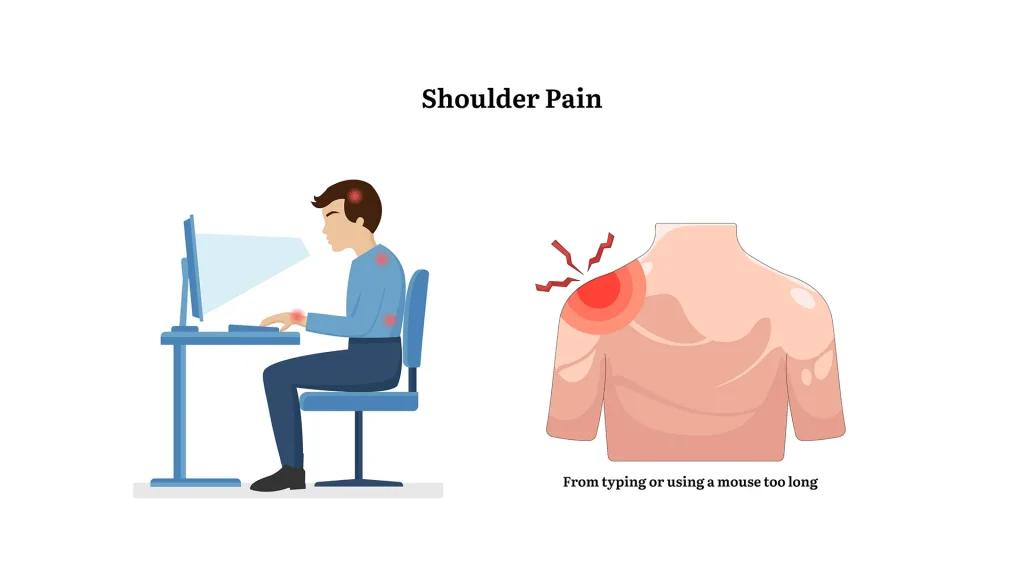
Shoulder Pain Ergonomics Gulshan
Shoulder pain ergonomics Gulshan often relates to arm position, mouse distance, rounded shoulders, or repeated reaching. If the shoulder stays slightly lifted all day, the upper trapezius and surrounding muscles can become overloaded.
Simple workstation changes may include:
- Keeping the mouse close
- Relaxing the shoulders
- Supporting the forearms when needed
- Avoiding long reaching
- Keeping the keyboard centered
- Taking short movement breaks
- Strengthening the upper back
If shoulder pain limits movement or does not improve with basic changes, physiotherapy evaluation can help identify the cause.
Ergonomic Assessment for Office Workers Gulshan
Ergonomic assessment for office workers Gulshan is helpful because many office workers wait until pain becomes chronic. Early assessment may identify risk factors before discomfort becomes a larger problem.
For corporate employees, ergonomic guidance may support comfort, focus, and productivity. It may also reduce repeated posture mistakes across teams.
A workplace habit review may include:
- Sitting duration
- Screen use
- Break frequency
- Desk arrangement
- Pain triggers
- Workload pattern
- Repetitive tasks
- Posture awareness
Workplace ergonomics physiotherapy Gulshan can be useful for individuals and corporate teams who want a healthier work environment.
What to Expect at Chowa for Ergonomics Correction
At Chowa Physio & Dental Care in Gulshan, ergonomics correction begins with understanding your pain, daily routine, work habits, and lifestyle. The physiotherapist may ask when pain starts, what makes it worse, what reduces it, and how your workstation is arranged.
The process may include:
- Initial discussion about pain and work routine
- Posture and movement assessment
- Workstation-related problem review
- Personalized correction plan
- Guided exercises
- Posture training
- Desk setup advice
- Follow-up support
The plan should be based on assessment. This is important because two people with back pain may need different solutions.
Personalized Correction Plan Based on Condition
A personalized plan may include strengthening, stretching, mobility work, posture correction, ergonomic education, and lifestyle advice. Some people may need more focus on the neck. Others may need back support, shoulder mobility, or core strengthening.
Personalized care helps avoid generic advice. It respects your job, body type, symptoms, work hours, and physical condition.
Ergonomics Correction Cost Gulshan
Ergonomics correction cost Gulshan may depend on assessment needs, session type, number of visits, severity of symptoms, and whether the person needs only ergonomic advice or ongoing physiotherapy support.
Some people may need a single assessment and workstation guidance. Others may need multiple sessions for pain, mobility, strengthening, and posture retraining.
Factors that may affect cost include:
- Initial assessment requirement
- Pain severity
- Treatment duration
- Need for follow-up sessions
- Exercise plan complexity
- Workstation review needs
- Additional physiotherapy support
The best way to confirm ergonomics correction cost Gulshan is to call the clinic, describe your problem, and ask about appointment details.
Home and Office Tips Before Your Appointment
Before your appointment, you can make a few safe changes:
- Take short movement breaks every 30–45 minutes
- Keep your monitor near eye level
- Avoid bending your neck over a laptop for long hours
- Support your lower back while sitting
- Keep your mouse close to your body
- Relax your shoulders while typing
- Avoid sitting in one posture all day
- Stop any exercise if pain increases
These tips are general. They are not a diagnosis. If pain is severe, persistent, or worsening, seek professional care.
Why Choose Chowa for Ergonomics Correction in Gulshan?
Chowa Physio & Dental Care offers local physiotherapy support in Gulshan, Dhaka. The clinic focuses on patient-centered care, structured rehabilitation, modern physiotherapy support, and appointment-based service access.
For ergonomics correction in Gulshan, Chowa can support people with posture-related pain, workstation discomfort, office worker back pain Gulshan, neck pain, shoulder strain, and daily movement problems. The care approach should be assessment-based, not one-size-fits-all.
This makes Chowa suitable for office workers, families, students, computer users, drivers, and corporate teams who want practical posture and workplace comfort guidance.
FAQs
What is ergonomics correction in Gulshan?
Ergonomics correction in Gulshan is a physiotherapy-based service that helps improve posture, workstation setup, and daily movement habits to reduce strain and support better comfort.
Who needs ergonomic physiotherapy Gulshan?
Ergonomic physiotherapy Gulshan may help office workers, computer users, students, drivers, and people with back, neck, shoulder, or wrist discomfort related to posture or work habits.
Can office posture correction Gulshan help with back pain?
Office posture correction Gulshan may help if back pain is linked to long sitting, poor chair support, weak posture habits, or an unsuitable desk setup. A physiotherapy assessment is recommended.
Is desk setup physiotherapy Gulshan only for office workers?
No. Desk setup physiotherapy Gulshan can also help students, freelancers, remote workers, gamers, designers, and anyone who spends long hours using a computer or laptop.
How long does posture correction take?
The timeline depends on your condition, pain severity, work habits, and consistency with exercises and posture changes. Some people need short-term advice, while others may need ongoing physiotherapy support.
About Chowa Physiotherapy & Dental Care
Chowa Physio & Dental Care is a trusted physiotherapy and dental care center in Gulshan, Dhaka, offering patient-focused support for pain, posture, movement, rehabilitation, and family healthcare needs. For ergonomics correction in Gulshan, Chowa helps office workers, computer users, students, drivers, and families understand posture problems and receive assessment-based physiotherapy guidance for better comfort and daily function
